


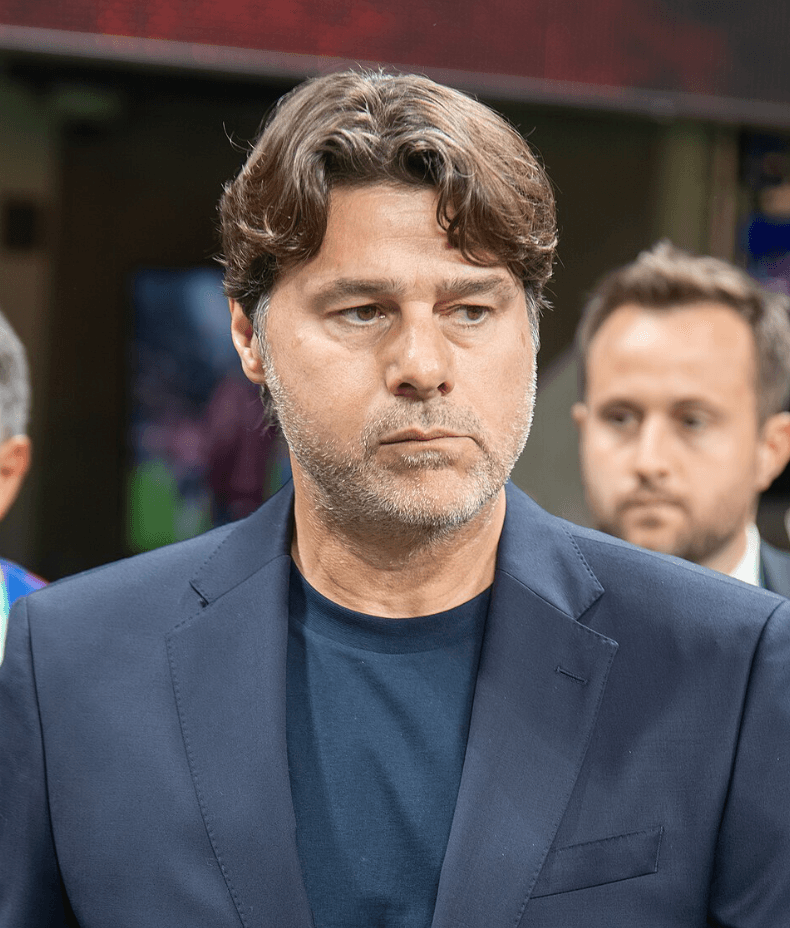
As of mid-November 2026, Manchester United sit in crisis, 18th in the Premier League after 10 matches with just one league win (against Ipswich), five draws, four defeats, and eight points; their worst start in the modern era. Michael Carrick’s position is under severe threat, with the hierarchy conducting due diligence and advancing talks to appoint Mauricio Pochettino, the current USMNT head coach, as his successor. The Argentine is reportedly ready to accept, with a roughly $10 million release clause in his US contract (extended through 2030) that United are prepared to trigger. This would mark a long-awaited move for a manager who has previously been linked to Old Trafford multiple times.

Early Life and Playing Career
Born on March 2, 1972, in the small rural town of Murphy in Santa Fe province, Argentina, Mauricio Roberto Pochettino Trossero grew up as the son of farmers Héctor and Amalia. Of Italian (Piedmontese) descent, he played football, volleyball, and judo as a child while studying agriculture. Scouted young by Newell’s Old Boys (with future mentor Marcelo Bielsa involved in youth coaching), he left home at around 14 for Rosario and made his professional debut as a centre-back.
Pochettino’s playing career (over 500 appearances) featured toughness and loyalty. At Newell’s he won Argentine league titles in 1990-91 and the 1992 Clausura and reached the 1992 Copa Libertadores final. He then spent the bulk of his career at Espanyol in Spain (two stints), winning the Copa del Rey in 2000 and 2006 and earning the nickname “the Sheriff.” Brief spells at Paris Saint-Germain (including the 2001 UEFA Intertoto Cup) and Bordeaux followed. Internationally, he earned 20 caps for Argentina, appearing at the 1999 Copa América and 2002 World Cup. He retired in 2006 at age 34 and later obtained coaching qualifications in Spain.
Coaching Career and Record
Pochettino began managing in January 2009 at Espanyol, where a struggling side sat near the relegation zone. He steered them to safety and mid-table finishes (roughly 161 games: 53 wins, 38 draws, 70 losses, ~33% win rate), emphasizing academy players and a high-pressing 4-2-3-1 style influenced by Bielsa.
He moved to Southampton in 2013 (60 games: 23W-18D-19L, ~38%). In his full season he guided them to eighth place—equalling their best Premier League finish at the time—with notable wins over bigger clubs. This set the stage for Tottenham Hotspur (2014-2019: 293 games, ~160W-60D-73L, ~54-55% win rate). At Spurs he delivered sustained success: consecutive top-four finishes, a club-record 86 points and Premier League runners-up in 2016-17, an EFL Cup final, and the club’s first Champions League final in 2019 (lost to Liverpool). He developed stars including Harry Kane, Dele Alli, and Son Heung-min while building an intense, high-pressing identity.
After a period out, he took over PSG in 2021 (84 games: 55W-15D-14L, ~65%). He won the Trophée des Champions, Coupe de France, and Ligue 1 title. At Chelsea in 2023-24 (51 games: 26W-11D-14L, ~51%), he improved the team to sixth place with European qualification and reached the EFL Cup final. Appointed USMNT head coach in September 2024, he led the co-hosts to the 2026 World Cup round of 16, setting US managerial records for most wins (3) and goals scored (11) in a single World Cup. His overall win rate across more than 650-680 games sits in the mid-to-high 40s to low 50s percent range, higher at top clubs.
Accomplishments and Recognitions
As a manager, Pochettino’s major trophies are the Ligue 1 title, Coupe de France, and Trophée des Champions with PSG. Near-misses include Premier League and Champions League runners-up finishes with Tottenham, plus EFL Cup finals with Spurs and Chelsea. Individual honors include multiple Premier League Manager of the Month awards and London Football Awards Manager of the Year (2018-19). He is widely recognized for youth development, man-management, and creating competitive, attacking teams that punch above expectations or maximise star talent. His USMNT World Cup records further burnish a reputation built on intensity and organization.
Expectations for Manchester United
United’s hierarchy and fans expect a rapid stabilization after the worst start in decades. With a trip to Liverpool looming on November 22, the priority is climbing out of the relegation zone toward mid-table or European places, restoring identity, and competing in cups. Given United’s resources, history, and post-Ferguson instability, longer-term goals include consistent top-four challenges and a clear playing philosophy. Pochettino has long been admired by the club and views the role as a major opportunity; success would require time, support in recruitment, and patience amid the intense scrutiny that has claimed previous managers.
What He Brings to the Table
Pochettino’s hallmark is high-intensity, high-pressing football (often from a 4-2-3-1 or 4-3-3 base) with aggressive full-backs, build-up from the back, quick transitions, and coordinated pressing to regain possession high up the pitch. He emphasises physical fitness, tactical organization, verticality, and player responsibility. His strengths include man-management, developing young talent, creating clear team identity, and instilling work rate and intensity—qualities that thrived at Southampton and especially Tottenham. He has Premier League experience, understands English football culture and pressure, and brings charisma and leadership. At United, this could supply the missing attacking structure and defensive coordination that have been lacking.
Immediate Changes He Might Make
Upon arrival, expect an immediate emphasis on fitness, pressing triggers, and intensity in training to raise the team’s physical and mental standards. A clearer tactical framework (likely 4-2-3-1) with defined roles, especially for full-backs and midfielders, would aim to improve organization both in and out of possession. Accountability would increase, with selection based on form and willingness to execute the system rather than reputation. He might tweak the lineup for better balance, integrate or promote suitable academy/young players, and focus on quick wins in pressing and transition to rebuild confidence. Early results against weaker sides could buy time while the high-press identity takes shape; adapting to the existing squad’s strengths (and limitations in full-back depth) would be essential.
Pochettino’s path from rural Argentina through Europe’s top leagues to the brink of Old Trafford reflects resilience, tactical clarity, and a proven ability to elevate teams. Whether he can finally deliver sustained silverware at a club of United’s stature remains the open question—but his track record of building intensity and identity offers a credible path out of the current turmoil.

Comments